

Skipping premium gas may feel harmless until you are staring at a $1,500 bill for damaged injectors or a failed knock sensor! If you are a proud owner of a BMW vehicle or are considering becoming one, you should know that not all gasoline is created equal. But does it matter what type of fuel you put in your tank?
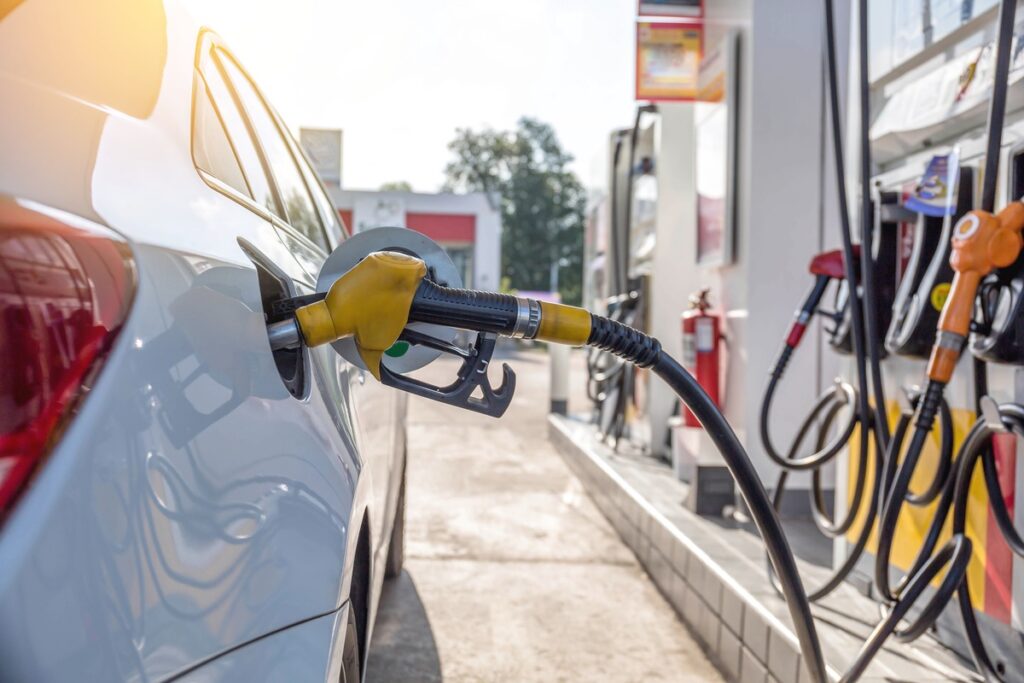
Gas comes in different octane ratings, which measure how well the fuel resists knocking inside your engine. Regular gas usually has an 87-octane rating, while premium gas falls between 91 and 93 octane. However, when it comes to high-performance or luxury vehicles like BMWs, the difference is not just a number; it is a significant difference.
Using the BMW gas is not just about unlocking peak performance. It also impacts your engine’s efficiency, long-term reliability, and overall health. So, before you pull up to the pump and grab whatever’s cheapest, let us dive into why fuel choice matters, especially for a precision-engineered machine like a BMW!
In This Article:
What Kind of Gas Does a BMW Take?
BMW’s engineering philosophy centers on delivering responsive power and precision handling. To achieve this, many BMW models employ high-compression ratios or turbocharging, which raise the pressure inside the combustion chamber. Compression ratio refers to the volume difference between the cylinder’s full extension and its compressed state. Typically, higher ratios boost efficiency but require higher octane to prevent knocks. For instance, imagine compressing a spring tighter; more energy is stored, but it needs sturdier materials to handle the stress.
Under these conditions, lower-octane fuels are more prone to “knocking”, a phenomenon where pockets of fuel-air mixture ignite prematurely, causing shockwaves that rattle engine internals. In simple terms, an engine knock, also called detonation, is an uncontrolled combustion creating shockwaves. You can think of a knock as two hands clapping inside your engine; the collision damages delicate components.
For most BMW models, including popular variants such as the 330i, 530i, 740i, and M series performance cars, BMW recommends premium gasoline with a minimum octane rating of 91. Entry-level or older naturally aspirated models may permit mid-grade fuel (89 octane), but sticking to premium ensures optimal performance and protects against knock-related wear. BMW’s owner manuals and onsite fuel filler labels consistently reinforce this requirement, highlighting that fuel octane is not just a marketing label; it directly correlates to engine design specifications.
Can You Put Regular Gas in a BMW?
Technically, you can, but doing so repeatedly is similar to asking a high-end sports car to run on economy-mode parts. When a BMW engine detects lower-octane fuel, its Engine Control Unit (ECU) intervenes by retarding ignition timing and adjusting turbo boost to prevent knock. This safeguards the engine in the short term, but chronically running on regular gas forces the ECU to operate in a “limp-home” setup more often, compromising performance, throttle response, and fuel economy.
Imagine sprinting while wearing ankle weights every time you run. While you can still run, your efficiency, speed, and comfort all take a hit. Similarly, your BMW can tolerate occasional use of regular gas, but its efficiency and power delivery suffer. If you are stranded, a half-tank of regular gas will not cripple your car; just refill with premium at the next opportunity.
What Happens If You Put Regular Gas in a BMW?
Using regular gas in BMW vehicles, especially those designed for premium fuel, often leads to short- and long-term effects, such as:
Short-Term Effects:
- Knocking and Engine Noise: Immediate engine knock might occur under hard acceleration. Knocking sounds like gravel rattling inside the engine, never a good sign.
- Reduced Power: The BMW ECU’s timing adjustments lower peak horsepower and torque, dulling acceleration. You might notice slower 0-60 times or hesitation when overtaking.
- Check Engine Light (CEL): Irregular combustion can trigger the CEL. On forums such as Reddit’s r/cars, many owners say that the CEL is an early warning of combustion instability when using low-octane fuel. Note that a persistent check-engine light after a low-octane fill-up warrants a diagnostic scan to clear potential misfires and prevent unseen damage. It is recommended that you follow BMW’s service schedule, use approved fuel system cleaners, and replace knock sensors at recommended intervals to mitigate risks from any temporary use of regular gas.
Long-Term Consequences:
- Component Wear: Persistent knock stresses pistons, valves, and bearings. Over time, this can lead to pitted piston crowns, damaged valve seats, and bearing wear.
- Fuel System Damage: Low-quality fuel often contains higher ethanol content or contaminants, accelerating corrosion in fuel rails, injectors, and pumps.
- Injector and Sensor Failures: BMW owners on Xbimmers report injector replacements costing around $2,000 at just 22,000 miles, attributable to carbon deposits from irregular combustion.
- Catalytic Converter Issues: Knock-induced unburnt fuel can overheat the catalytic converter, leading to premature failure and costly exhaust repairs.
Many car drivers hold certain myths to heart. One such common myth is the belief that one tank of regular gas will ruin their BMW. While occasional use often triggers a mild knock and a CEL, it will not instantly cause catastrophic damage if corrected promptly. However, habitual use amplifies risks.
Another common myth is the belief that premium gas is overpriced marketing hype. It is essential to know that premium formulations contain higher octane-stabilizing additives and detergents, which keep injectors and intake valves cleaner, maintaining factory performance.
Contrary to these beliefs, according to a report on X3bimmers, a BMW forum, a BMW X3 owner replaced injectors costing around $2,000 at just 22,000 miles due to carbon deposits from using low-octane fuel. Also, users on r/cars (Reddit) report that a faulty knock sensor can allow harmful detonation unnoticed, even with the ECU’s safety net. In addition, research has shown that premium gasoline costs about $0.20-$0.40 more per gallon, its detergents and optimized combustion yield up to 3% better fuel economy, and reduced maintenance costs over time.
Can You Put E85 Gas in a BMW?
E85 (85% ethanol, 15% gasoline) offers higher octane but burns differently. Standard BMW engines lack the required flex-fuel sensors and injector mapping. Without a dedicated flex-fuel conversion, E85 can cause lean misfires, erratic idle, and severe knocking. For owners interested in ethanol, purpose-built conversion kits exist, but they require recalibrated ECUs, upgraded fuel pumps, and often an aftermarket flex-fuel sensor kit. Attempting E85 on a stock BMW risks stranded drives and expensive fuel system repairs.
Conclusion
BMW vehicles employ high-performance engines calibrated for premium fuel to deliver optimal power and reliability. Hence, while skimping on fuel quality may save you a few dollars today, in the long run, it is a gamble that often costs much more than you bargain for. The following are key considerations for BMW car owners:
- BMWs require 91+ octane for best performance: BMW engines feature high compression ratios and advanced turbocharging systems that demand higher resistance to premature ignition. Using 91+ octane fuel ensures optimal combustion timing, maximizing horsepower and torque while minimizing the risk of knock. This octane level aligns with BMW’s factory calibrations for engine efficiency and longevity.
- Regular gas can cause knocking, reduced power, and long-term wear: Regular gasoline with lower octane ratings can trigger engine knocking, reducing both power output and throttle responsiveness. Persistent detonation forces the engine control unit to retard timing, leading to diminished acceleration and fuel efficiency. Over time, suboptimal combustion often accelerates wear on pistons, cylinder walls, and vital engine components.
- ECU compensation helps but doesn’t eliminate risks: The electronic control unit (ECU) adjusts ignition timing and fuel injection to counteract knock when lower-octane fuel is detected. While these adaptations reduce pinging, they compromise acceleration, throttle response, and fuel economy. Moreover, ECU compensation cannot fully eliminate abnormal combustion pressures or protect internal parts during extended use of substandard gasoline.
- Real owners have faced injector and sensor issues due to low-quality fuel: Numerous BMW owners report injector clogging and faulty fuel pressure sensors after using low-quality or regular gasoline. Contaminants and deposits build up in fuel injectors, impairing spray patterns and engine performance. Sensor malfunctions can trigger warning lights, necessitating professional cleaning or part replacement, and leading to unexpected maintenance costs.