

A cheap car insurance quote can seem attractive until you realize what it doesn’t cover. Your state may have requirements a policy can meet and still not protect damage to your own vehicle. Another might have collision coverage but have a deductible you would not be able to pay.
By 2026, the right auto insurance policy will be a mix of three decisions: what protection you need, who will drive the car and what kind of vehicle you have. When you look at these together you can compare policies on more than price.
This guide will show you how to build a practical coverage plan, find the holes and compare quotes that truly reflect your driving needs.
In This Article:
1. Understand What Each Type of Car Insurance Covers
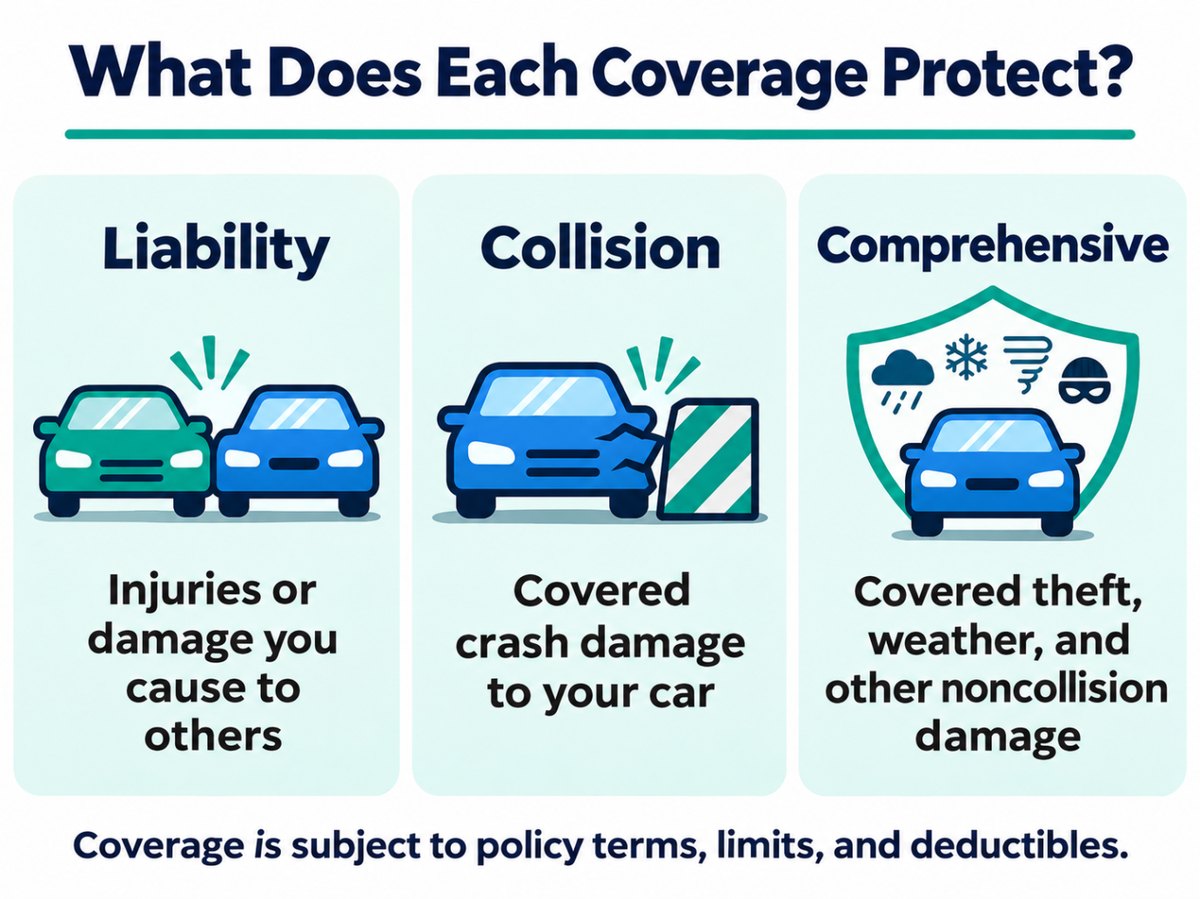
Begin with the situations where you want insurance to assist you. Replacing a stolen car, repairing your car after a crash, and injuring another driver are different coverages.
| Coverage | What it generally helps pay for | Key detail to check |
| Bodily injury liability | Other people’s injuries when you are legally responsible for an accident | Per-person and per-accident limits |
| Property damage liability | Damage you cause to another person’s vehicle or property | Maximum payment per accident |
| Collision | Damage to your vehicle from a collision or rollover | Deductible and vehicle valuation |
| Comprehensive | Covered noncollision losses, such as theft, hail, fire, or vandalism | Covered events, exclusions, and deductible |
| Uninsured/underinsured motorist | Eligible losses involving a driver without enough insurance | Injury and property damage options vary by state |
| Personal injury protection or medical payments | Eligible medical expenses for you or passengers | Benefits, limits, and state-specific rules |
Coverage names alone do not explain every condition. Read the policy’s exclusions and ask how each coverage applies in your state. Liability insurance generally addresses harm you cause to others; collision and comprehensive address covered damage to your own car.
What Does “Full Coverage” Actually Mean?
The term “full coverage” is often used to refer to a policy that bundles together liability, collision, and comprehensive insurance. It is not a blanket promise that all losses will be covered.
Request a breakdown of coverage. Some options, like rental reimbursement, roadside assistance, gap protection and coverage for paid driving, may have to be purchased separately.
2. Separate State Requirements From Your Financial Needs
First is the coverage that your state requires. This is not necessarily enough protection in the event of a serious accident.
For example, if you choose a $25,000 property damage liability limit and cause $45,000 in covered damage. The difference is 20k and that could be on your shoulders. This is an illustration and not a statement of any particular state’s minimum.
When you choose your liability limits, think about your savings, your assets and your ability to absorb an uncovered claim. Get quotes at a few limits so you can see the real price difference. The extra premium varies but it may be cheaper than you think to insure a higher limit.
Contact your state insurance department for current requirements. State laws vary, and just because an accident is expensive, the insurer will not pay beyond applicable policy limits.
3. Match the Policy to Your Driver Profile
People driving the same type of car can get different quotes. Insurers will look at your driving history, experience, miles driven per year, location and household drivers. Other rating factors are determined by state law and the insurer.
If you are newly licensed, returning after a coverage gap or changing how you use your vehicle, it helps to understand how your driver profile affects your rate before comparing prices.
Your profile should help shape the questions you ask, too:
| Driver profile | Questions to ask before buying |
| Newly licensed or teen driver | How should the driver be listed, and are training or student discounts available? |
| Experienced commuter | Is the mileage estimate accurate, and is the commute correctly recorded? |
| Retired or occasional driver | Does reduced driving qualify for a different rate or program? |
| Driver with accidents or violations | Which insurers will offer coverage, and what terms apply? |
| Rideshare or delivery driver | What protection applies during each stage of app use? |
| Driver without a personal vehicle | Would a non-owner policy fit the vehicles and situations involved? |
Driver categories provide a starting point for comparison, rather than a guaranteed price. Eligibility and available discounts depend on the provider and state.
Report Household Drivers Accurately
Tell the insurer who lives in your household and who regularly uses the car. Ask how to handle a teenager learning to drive, a student away at college, or a household member with separate insurance.
Get the insurer’s requirements in writing rather than assuming occasional use needs no disclosure.
4. Choose Coverage Around the Vehicle You Own
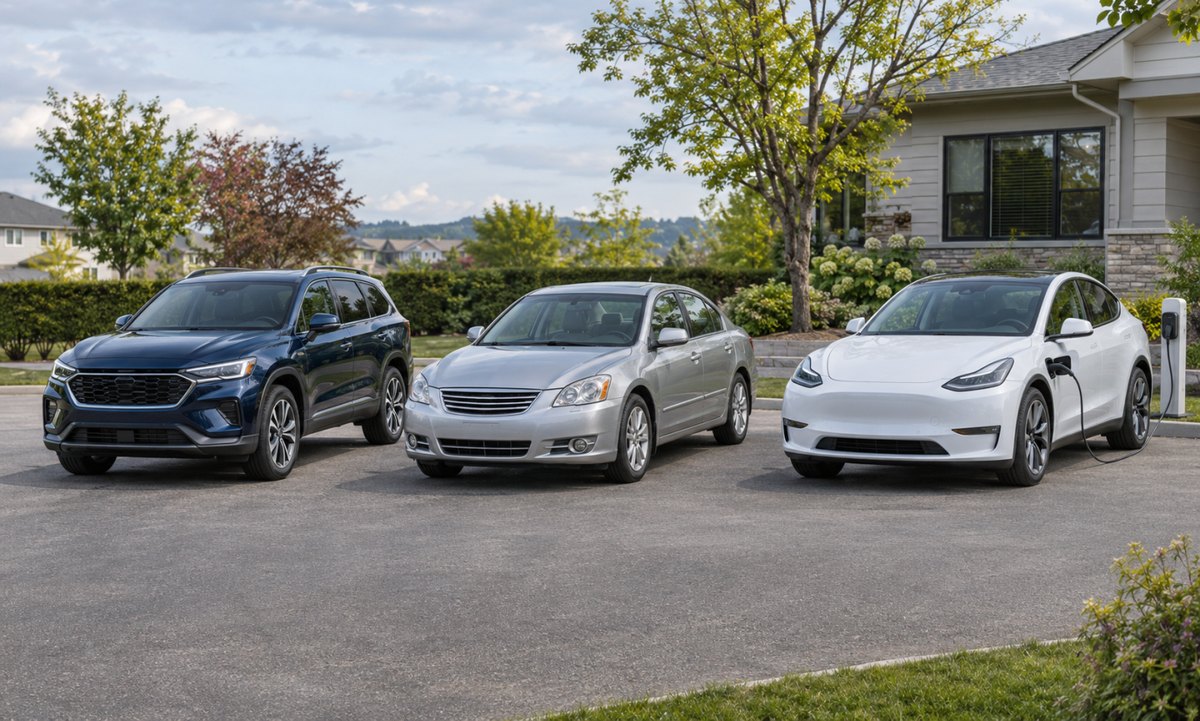
The price of the vehicle is only part of the insurance equation. Repair costs, replacement value, technology and ownership arrangements are also important. Insurers might charge a different price for the same driver depending on the make, model and year of the vehicle.
New, Financed, or Leased Cars
Lenders and leasing companies typically require you to carry collision and comprehensive coverage. Check your contract for required limits and maximum deductibles before you accept a quote.
Also compare your loan balance against the car’s current value. If you owe more than the value of the vehicle, gap protection might be applicable.
For example, a $29,000 loan balance and $25,000 vehicle value would mean a $4,000 difference before other adjustments. After a covered total loss, an eligible gap product may cover some or all of that difference, subject to the terms of the gap product. Look at exclusions, payout caps and cost, not assuming all gap products are the same.
Older, Paid-Off Vehicles
An older car does not automatically need only liability coverage. The practical question is whether you could afford to repair or replace it yourself.
Compare:
- The vehicle’s current market value.
- The separate premiums for collision and comprehensive.
- The applicable deductibles.
- Your available replacement savings.
- How essential the vehicle is to work or family responsibilities.
A car with a modest resale value can still be difficult to replace on short notice. Evaluate collision and comprehensive separately before removing either.
Electric Vehicles and Hybrids
Ask about: battery damage, qualified repair facilities, towing and rental transportation during repairs. For an EV:
Battery damage from a covered crash or other insured event is not the same as gradual battery degradation. Standard automobile insurance does not cover normal capacity loss or wear. Ask specifically about home and portable chargers, as charging equipment may also be covered under different arrangements.
Classic, Modified, or Specialty Vehicles
Ask if the policy’s valuation method is consistent with your vehicle and any modifications to it. Discuss custom equipment, storage, mileage restrictions, and any special coverage needs when buying.
Keep photos and receipts for any major improvements and ask for written confirmation as to how those items would be handled in a claim.
5. Set a Deductible You Can Actually Afford
A deductible is the portion of a covered loss you are responsible for paying. Choosing a higher collision or comprehensive deductible generally lowers the premium, but it increases your share when a claim occurs.
Use the quoted savings to assess the trade-off:
| Illustrative option | Annual premium | Collision deductible |
| Policy A | $1,800 | $500 |
| Policy B | $1,620 | $1,000 |
Policy B saves $180 a year but increases the deductible by $500. That additional exposure equals approximately 2.8 years of premium savings.
This calculation does not predict whether you will have an accident. It shows why the lower premium should be considered alongside your emergency savings.
6. Check How You Use the Car
A policy needs to reflect actual vehicle use. Commuting, occasional personal trips, deliveries, and rideshare work can create different coverage questions.
The Insurance Information Institute notes that personal auto insurance generally does not cover commercial vehicle use, and supplemental products may be needed for rideshare activity.
If you earn money with your car, describe the activity precisely. Ask:
- Does the policy cover this type of work?
- When does any platform-provided coverage begin and end?
- Are there gaps while waiting for a request?
- Does coverage include damage to my own vehicle?
- What deductible applies during a work-related claim?
A general assurance that you are “covered for delivery” is less useful than clear answers about these situations.
7. Compare Quotes Using the Same Specifications
A cheaper quote is meaningful only when you understand what changed.
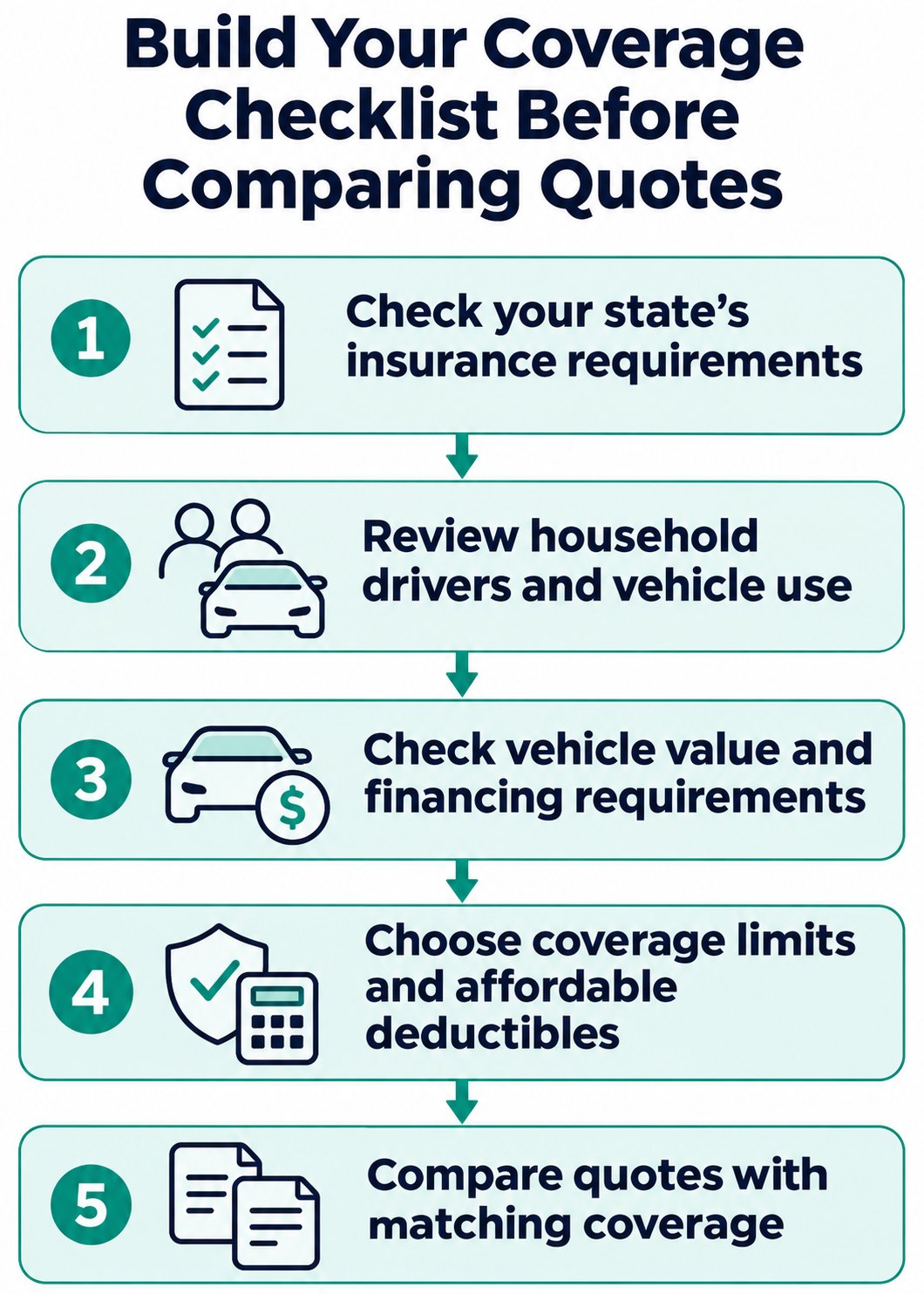
Prepare one set of coverage requirements and use it with every insurer. Keep the following consistent:
- Drivers and vehicles.
- Garaging address and annual mileage.
- Vehicle use.
- Liability limits.
- Collision and comprehensive deductibles.
- Medical and uninsured motorist options.
- Optional benefits.
- Policy term and effective date.
The NAIC recommends shopping around and verifying that the insurer and agent are licensed in your state. Price and claims service both deserve attention.
Compare the full policy-term cost, including applicable fees. If quotes cover different terms, normalize the costs while remembering that future renewal prices can change.
8. Evaluate Extras by the Problem They Solve
Optional benefits are most useful when they address a specific need.
Rental reimbursement may matter if you have no backup transportation. Check the daily allowance, maximum benefit, and covered-loss requirements. Roadside assistance deserves a similar review, particularly towing limits and services you may already receive elsewhere.
For any optional feature, ask three questions:
- What event makes the benefit available?
- How much can it pay?
- What restrictions could prevent payment?
This approach makes add-ons easier to evaluate than a long list of reassuring names.
9. Review the Policy Before Switching
Read your application and proposed coverage carefully.
Check the drivers, vehicle identification number, address, limits, deductibles, exclusions and payment schedule. If something differs from the quote, obtain clarification.
Cancel the old policy before the effective date of the new policy. Store your coverage confirmation, policy papers and proof of insurance together.
Revisit your choices when you move, replace a vehicle, add a driver, change jobs or use the car differently. A policy that works today may need to be tweaked after a big change.
Choosing a Policy You Can Rely On
The right car insurance policy will give you the protection you need that matches your risks, the terms you can understand, and the price you can afford.
Start with your state’s requirements, then consider your household drivers, vehicle value, financing and daily use. Check out similar quotes and choose a deductible you can afford, and get your coverage questions answered before you pay.
The idea is to know what support you can expect after a loss – and what costs you would still have to bear yourself.