

Can you believe that we didn’t wash our hands before eating only several centuries ago? Basic hygiene wasn’t a norm, but smart individuals questioned the previous order and significantly increased humanity’s chances of survival. That’s how the world functions nowadays: thanks to smart individuals who are ready to think outside the box and promote their ideas. No wonder that various industries engage students in their projects to bring innovation and create a healthy competitive environment. Let’s look closer at such partnerships and discuss real-life cases that ultimately inspire.
In This Article:
So why students?
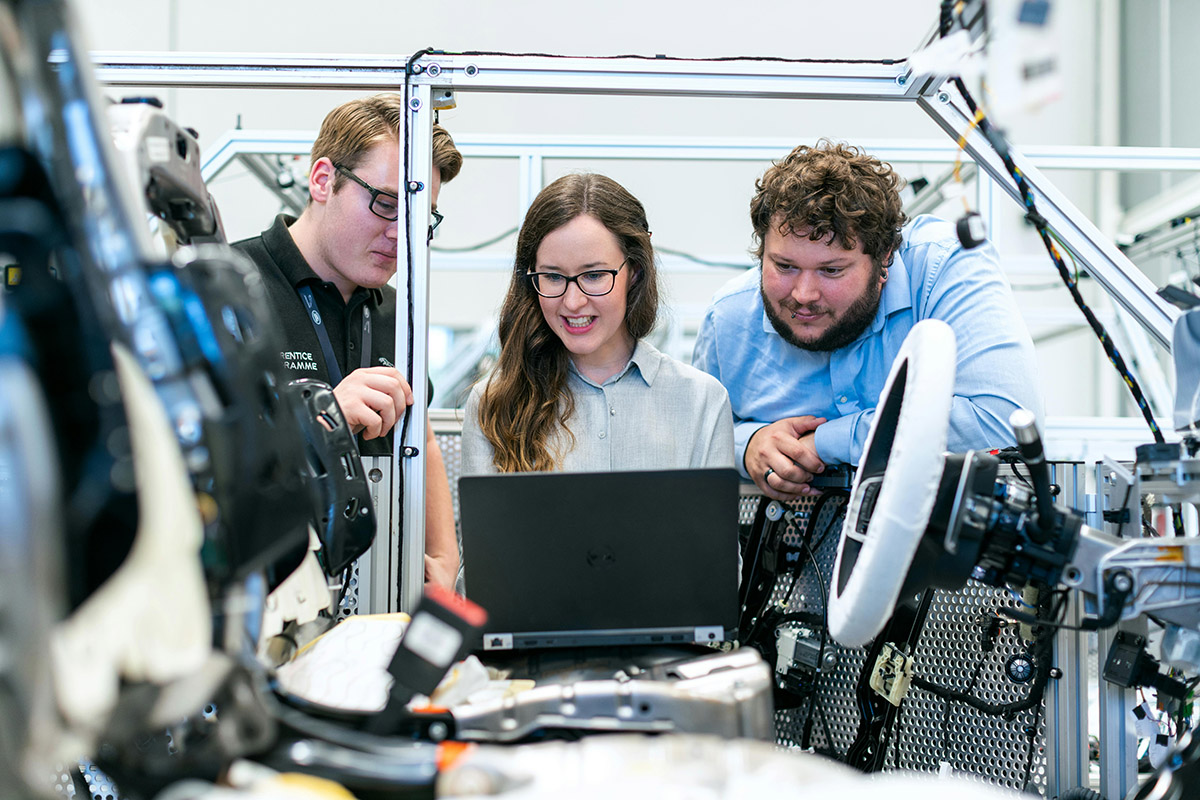
After all, the automotive industry is not a place for jokes. Complicated machines require the attention of professionals with decades of experience, right? Nevertheless, students’ contributions are not rare since both sides are highly interested in such partnerships. The industry looks for creative individuals with excellent time management and sincere enthusiasm. Students look for opportunities to earn a living while still dedicating time to their assignments and getting relevant experience. What if you, with your passion for cars, didn’t have to work as a waiter or barista?
We can come up with endless examples of how student years teach you to set priorities. Maybe you’ve skipped student car design competitions because of your part-time job, which is not so exciting but still feeds you. There may be times when you’ve considered buying term paper and asking for assistance services like AdvancedWriters to improve your skills. Relying on trustworthy examples and following professionals’ advice is the most obvious way to upgrade. Then why can’t the same principle relate to automotive industry jobs?
The thing is, it can. Companies are interested in passing down their knowledge and getting fresh perspectives in return. Current projects are focused on AI-driven cars, alternative fuels, and smart mobility. Student concept cars often have such features since they reflect the needs of modern customers. Uncertain future makes companies consider eco-friendly solutions, and they turn to proactive students for advice. Universities encourage such partnerships to provide learners with real-life experience and employment opportunities, while companies support initiatives to make progress unstoppable.
Let’s turn to a story
We’ll have other opportunities to discuss abstract concepts and current tendencies. But first, why don’t we take a look at a particular real-life case? On its website, Škoda posts a story about students making their dream car. According to it, a team of select apprentices from the local vocational college has worked on the MOUNTIAQ, an absolutely unique car. Students were responsible for every detail, including the initial design and distinctive features. The annual Azubi Car Project brought together enthusiasts who joined their efforts as a team.
Škoda’s article is exceptionally valuable since it describes the whole process in detail and in simple words. This way, even those unfamiliar with the automotive industry can get the point and find inspiration. No matter how mysterious the vehicle development may seem, it starts with brainstorming and sketches. The team compares different versions and incorporates critical features in a single model. In our case, Škoda chief designer Oliver Stefan helped apprentices manage this stage, ensuring they avoided common mistakes and uncertainties. Sticking to the initial idea was also vital. According to it, the Škoda KODIAQ base was meant to become a pick-up on massive wheels, ready for unpaved roads and expeditions.
The team pitched their design to the Škoda Board of Directors, learning to explain and defend their ideas in a friendly environment. The approval meant that a new car was ready to move from paper to workshop. Remarkably, the project gathered apprentices from various fields, including car mechanics and car electricians. The logistics specialists were responsible for schedules and deadlines, ensuring that others could follow the plan. All apprentices needed to transfer their knowledge from the academic setting to the real automotive industry. For instance, students from the welding course had to demonstrate their skills on a real car instead of two pieces of sheet metal.
Summing up, those students faced multiple challenges, but all agreed that they had underestimated the time factor. Although strict deadlines contribute to extra pressure, the project can’t exist in a vacuum. It must align with the company’s long-term and short-term objectives and demonstrate particular results when the public is ready. Any car is a product, which requires a thoughtful marketing strategy to get to its targeted audience. Simultaneously, any car is a dream: students contributing to the project couldn’t hold their excitement.
How to make the dream come true?
Škoda’s case demonstrates that reputable companies are truly interested in providing students with exceptional opportunities. You may consider joining other projects and competitions to test your skills, gain experience, and use networking opportunities. Promising options include:
- Formula Student is Europe’s most established automotive competition in which teams design, build, and race a single-seater race car. The industry and high-profile engineers encourage young people to develop their skills and consider a career in engineering. They successfully demonstrate all the benefits since over a hundred teams join the competition annually.
- Shell Eco-marathon is another leading student engineering competition. As a global academic program, it focuses on energy optimization and alternative sustainable solutions. Shell Eco-marathon wants to discover leaders ready to foster innovation and collaboration in the field.
- The A’ Vehicle, Mobility, and Transportation Design Competition is open for individual designers, teams, and businesses. It also accepts projects at their concept stage and already realized works. This competition is a must-have for those willing to implement their designs in the automotive industry.
Wrapping up
Well, all existing competitions seem highly demanding and challenging, but so does the sphere itself. Those interested in the automotive industry are already familiar with the risks. Simultaneously, they learn to dream big early and don’t accept failures. Sounds like you? Then don’t wait for other signs and start researching options available in your community. Your career in engineering or automotive design shouldn’t depend on a miracle, so brainstorm the ideas and finally share them!